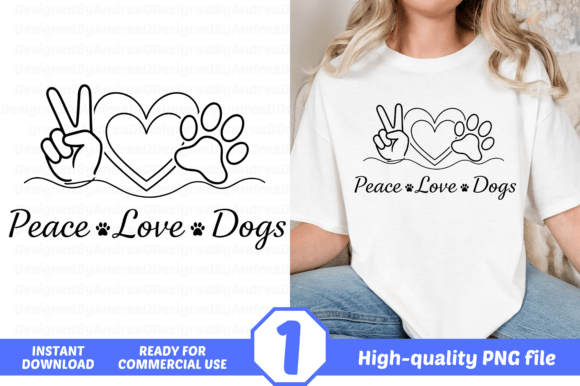
Peace Love Dogs: A Guide to High-Quality Sublimation Design for Creators
The combination of Peace Love Dogs represents more than just a catchy phrase; it is a timeless sentiment that resonates deeply with animal lovers across the globe. For creators, entrepreneurs, and hobbyists looking to expand their product lines, leveraging this theme through high-quality sublimation design offers a fantastic opportunity. Whether you are printing stickers, customizing t-shirts, designing greeting cards, or creating wall art for home decor, the demand for heartfelt, dog-themed imagery remains consistently strong. However, the difference between a best-selling item and a disappointing product often lies in the technical details of the design file you choose and how you apply it.
When you encounter a download package offering a Peace Love Dogs sublimation design, such as a 300 DPI PNG file, it is tempting to immediately start printing. While the ease of resizing and the versatility of the format are significant advantages, rushing into production without understanding the nuances of sublimation can lead to avoidable errors. Many beginners and even experienced professionals overlook critical factors regarding resolution, color management, and substrate compatibility. By taking a moment to evaluate your materials and methods, you can ensure that the final result honors the joyful spirit of the design.
Understanding Resolution and Image Integrity
One of the most common misunderstandings in the world of digital printing involves resolution. You may see a file advertised as 300 DPI (dots per inch), which is the gold standard for crisp, professional printing. However, simply having a 300 DPI file does not guarantee a perfect print if the physical dimensions are manipulated incorrectly. A frequent mistake occurs when users stretch a small image to fit a large substrate, such as a full-back t-shirt or a large wall canvas. When you enlarge a raster image like a PNG beyond its intended limits, the software must invent pixels, leading to blurriness or pixelation that ruins the "Peace Love Dogs" aesthetic.
To avoid this, always check the actual pixel dimensions of the file before you begin. If the design is intended for a sticker or a small card, it will look sharp at that size. If you plan to use it for a larger application, verify that the pixel count supports the expansion. Most quality design packs allow for easy resizing within reasonable limits using standard software. A better approach is to determine your final product size first, then scale your design proportionally. If you need a larger version for a specific project, consider reaching out to the designer or looking for a vector alternative, though for most sublimation projects involving detailed textures and gradients, a high-resolution PNG is ideal.
Color Accuracy and Printer Profiles
Another area where creators often face challenges is color fidelity. The vibrant colors you see on your monitor may not match what appears on the sublimated product. This discrepancy happens because screens emit light (RGB color space), while printers use ink (CMYK or specific sublimation ink profiles). A Peace Love Dogs design often relies on soft pastels, bold outlines, or specific skin tones for the dogs. If these colors shift during printing, the emotional impact of the image can be lost.
It is crucial to calibrate your monitor and use the correct ICC profiles for your specific printer, ink, and paper combination. Many users skip this step, assuming the default settings are sufficient. In reality, generic settings can wash out colors or make them appear muddy. Before committing to a full production run, always print a test strip. Check how the blues, pinks, and earth tones render on your specific blank. If the blacks look gray or the whites appear yellowish, adjust your printer settings accordingly. This small investment of time and ink saves significant waste and ensures customer satisfaction.
Selecting the Right Substrates
The success of any sublimation project depends heavily on the material you are printing on. Sublimation ink turns into gas under heat and bonds with polyester polymers. A common error is attempting to sublimate onto materials with low polyester content or non-coated surfaces. For instance, if you are making t-shirts, ensure they are at least 65% polyester for vibrant results; 100% cotton will not hold the dye unless you use a special sublimation coating spray, which can alter the hand-feel of the fabric.
Similarly, when creating hard goods like mugs, keychains, or frame illustrations, verify that the items have a polymer coating designed for sublimation. Using uncoated ceramics or metals will result in the ink wiping right off. For the Peace Love Dogs theme, which might be applied to scrapbooks or wall decorations, ensure the surface is smooth and light-colored. Dark substrates will mute the design, as sublimation ink is translucent and cannot print white. The white of the substrate becomes the white in your design. Choosing a bright white blank ensures the peace signs and dog illustrations pop with clarity and joy.
Heat Press Techniques and Timing
Even with a perfect file and the right blank, improper heat press technique can ruin the outcome. Issues like ghosting (a double image), uneven pressure, or scorch marks are often the result of rushed workflows. When applying a Peace Love Dogs transfer, consistency is key. Ensure your heat press is fully preheated and that the temperature is accurate according to your ink manufacturer's recommendations.
Pressure should be firm but not crushing. Too little pressure prevents the ink from penetrating the substrate, while too much can flatten textures or cause bleed-through. Time is equally critical; under-pressing leads to faded colors, while over-pressing can yellow the fabric or substrate. A practical tip is to use a Teflon sheet or parchment paper over your design to protect both the image and your heat press platen. Additionally, allow the item to cool completely before peeling off the paper if your specific process requires a cold peel, or peel hot if specified. Ignoring these instructions can lead to cracking or peeling of the design over time.
Maximizing Business Potential
For those looking to expand their business, the versatility of a single Peace Love Dogs design is a major asset. Instead of limiting yourself to one product type, consider how this single asset can populate an entire collection. You can create matching sets: a t-shirt for the owner, a bandana for the dog, a mug for the morning coffee, and a sticker for the laptop. This cross-product strategy increases the average order value and appeals to customers who love cohesive branding.
However, avoid the mistake of saturating the market with identical listings. Differentiate your products by changing the context. Use the design on a rustic wood frame for a homey feel, or on a sleek metal water bottle for an active lifestyle appeal. Tailor your marketing photos to show the design in use within these different environments. This helps potential buyers visualize the product in their own lives, making the purchase decision easier.
In conclusion, working with Peace Love Dogs sublimation designs offers a rewarding blend of creativity and commerce. By paying attention to resolution limits, managing color profiles accurately, selecting appropriate substrates, and mastering your heat press settings, you can produce high-quality items that stand out. Avoid the pitfalls of haste and assumption. Instead, adopt a mindset of testing and refinement. Whether you are a freelancer selling on Etsy, a small business owner stocking a local boutique, or a hobbyist making gifts for friends, these best practices will help you deliver products that truly embody the spirit of peace, love, and dogs.