Integrating Dance Design into Your Creative Production Workflow
In the modern landscape of digital creation and physical product manufacturing, the gap between a concept and a finished good is often bridged by high-quality digital assets. For professionals ranging from small business owners to freelance graphic designers, the efficiency of this bridge determines profitability and creative satisfaction. Dance Design represents a specific category of visual asset that serves as a cornerstone for various production pipelines, particularly in the realms of apparel customization, promotional materials, and decorative arts. Understanding how to effectively integrate these designs into a broader workflow is essential for maximizing their utility and ensuring consistent output quality.
At its core, a Dance Design file—typically delivered as a high-resolution PNG at 300 DPI—is more than just an image; it is a pre-engineered component ready for deployment. Unlike low-resolution web graphics meant solely for screen viewing, these files are constructed with print fidelity in mind. The 300 DPI (dots per inch) resolution is the industry standard for sharp, crisp printing, ensuring that when the design is transferred onto a t-shirt, mug, or wall decal, the edges remain defined and the colors vibrant. This technical specification is the first critical factor in a successful production process, eliminating the need for time-consuming upscaling or vector tracing that can degrade image quality.
Strategic Placement in the Project Lifecycle
The integration of Dance Design assets can occur at multiple stages of a project, depending on the nature of the business or creative endeavor. For entrepreneurs launching a print-on-demand store, these designs often serve as the foundational inventory. In this scenario, the design phase is effectively outsourced to the asset creator, allowing the business owner to focus on marketing, customer service, and platform management. By utilizing exclusive designs intended for individual or commercial expansion, creators can bypass the initial bottleneck of illustration while maintaining a unique brand identity.
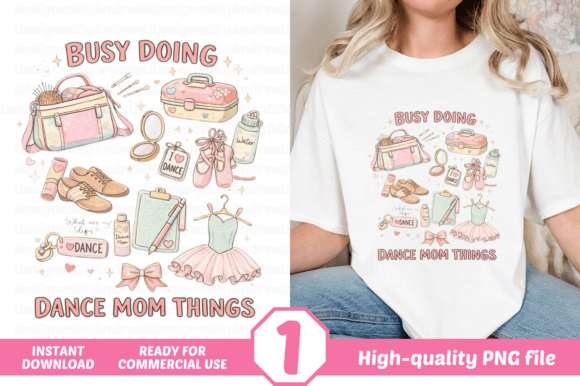
Conversely, for educators or community organizers planning an event, such as a dance recital or a studio open house, these assets fit into the preparation phase. Here, the Dance Design acts as a unifying visual element. It can be applied to event programs, commemorative stickers, or team uniforms. The workflow here involves selecting the appropriate design, resizing it for specific mediums using standard software, and coordinating with a printing vendor or managing an in-house sublimation setup. The availability of a single, high-quality PNG simplifies this coordination, as there is no need to manage complex layer structures or proprietary file formats that require specific, expensive software suites.
Compatibility and Technical Implementation
A significant advantage of working with PNG files for Dance Design projects is their universal compatibility. Whether a user operates on Windows, macOS, or Linux, and regardless of whether they utilize professional-grade tools like Adobe Photoshop and Illustrator or accessible alternatives like Canva, GIMP, or Affinity Designer, the PNG format functions seamlessly. This interoperability is crucial for collaborative workflows where different team members may have different software preferences.
The transparency feature inherent in PNG files is particularly vital for sublimation and heat transfer processes. When preparing a design for a dark-colored garment, a white underbase is often required. However, for light-colored fabrics or specific sublimation blanks like mugs and mousepads, the transparent background ensures that only the intended ink is transferred, preventing unsightly white boxes around the artwork. This reduces waste and minimizes the need for manual masking during the pre-press stage.
Resizing is another critical operational step. While the source file is provided at 300 DPI, different products require different dimensions. A design intended for a large wall decoration will need to be scaled up significantly compared to one meant for a sticker or a card. Because the source resolution is high, users can scale the image down without any loss of quality. Scaling up is also feasible within reasonable limits due to the high starting DPI, but prudent workflow management suggests testing a small print run before committing to large-scale production to verify clarity at the maximum desired size.
Workflow Optimization for Sublimation and Printing
For those specializing in sublimation printing, the Dance Design asset fits directly into the color management and mirroring phase of the workflow. Sublimation requires the image to be printed in reverse (mirrored) so that it appears correctly once transferred to the substrate. Since the PNG file is a flat raster image, this process is straightforward in almost any printing driver or design software. Users must ensure their color profiles (such as sRGB or CMYK, depending on the printer's requirement) are aligned to prevent color shifting, a common issue where vibrant dance-themed colors appear dull on the final product.
Efficiency in this sector relies on batch processing. If a business owner purchases a bundle of exclusive designs to expand their catalog, the workflow should involve organizing these files into a structured directory system immediately upon download. Categorizing by theme, season, or product type allows for rapid retrieval when fulfilling orders. Consistency in file naming conventions further aids in inventory management, reducing the risk of sending the wrong design to production—a costly error in terms of both materials and time.
Expanding Business Horizons with Versatile Assets
The versatility of a single Dance Design file allows for diverse revenue streams. A freelancer might use the same asset to create a limited edition t-shirt line, a set of greeting cards for dance students, and digital scrapbook elements for online sale. This multi-use approach maximizes the return on investment for the asset purchase. Instead of buying separate licenses for different product types, the user leverages one high-quality file across multiple channels.
Quality control remains paramount throughout this expansion. Before listing a new product, such as a framed illustration or a custom sticker, a physical proof should always be generated. This step verifies that the 300 DPI resolution translates well to the specific material being used. Textures of paper, fabric, or ceramic can interact with ink differently, and a test run ensures the Dance Design maintains its integrity across these varied surfaces. This practice builds trust with customers and establishes a reputation for reliability, which is essential for long-term business growth.
Long-Term Utility and Organization
Integrating these designs into a long-term strategy requires thoughtful organization. Digital assets are an investment, and their value diminishes if they cannot be located when needed. Creators should maintain a backup system, ideally cloud-based, to protect against data loss. Furthermore, keeping track of licensing terms is part of professional due diligence. While many exclusive designs offer broad usage rights for individual and business expansion, understanding the specific boundaries—such as restrictions on reselling the raw digital file versus selling the printed physical good—prevents legal complications.
Ultimately, the successful adoption of Dance Design resources hinges on treating them as integral components of a larger operational machine. They are not merely decorative afterthoughts but functional tools that drive production. By respecting the technical specifications, utilizing compatible software workflows, and adhering to rigorous quality control measures, professionals can streamline their creative processes. This approach allows them to focus less on the mechanics of file preparation and more on the strategic aspects of their business, such as brand development and customer engagement.
In conclusion, whether you are a hobbyist looking to personalize gifts or an entrepreneur scaling a printing business, the practical application of high-resolution, versatile design assets offers a clear path to efficiency. The ability to easily resize, the compatibility with major software platforms, and the readiness for high-quality sublimation make these files indispensable. By embedding these resources into a structured, repeatable workflow, creators can ensure consistency, reduce production errors, and unlock the full potential of their creative ventures.